
Millinocket's Housing Development, Part 2
New housing areas continued to develop between the 1920’s and 1950’s and the older areas saw changes. Some of the Italian immigrants had paid off their debts for passage to America and built their own homes across the stream from the mill.
Medway Road, the old tote road to Medway and the Penobscot River and the only route out of town at that time, saw homes built on the town end. Many of these small homes had mill wrapper paper on the inside and tarred paper plus shingles on the outside. These houses were built quickly and many families moved in before the houses were totally completed. A man named Barbian had a boarding house near where Medway Road joined Central Street (people today remember it as the location of a popular restaurant/motel). An area off Medway Road was set aside early as the location for the town’s cemetery.
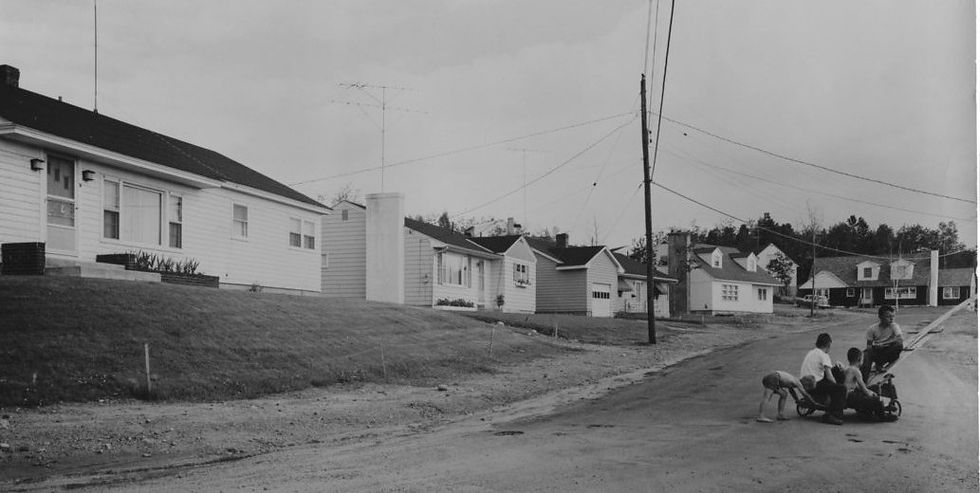
The end of WWII brought more change. The mill was expanding and making paper products other than just newsprint. The mill was hiring workers. The returning vets and new mill workers needed homes. The town’s population was climbing…by 1948, the population was 6300. Central St. was extended to the town line and talk began about a “New Development” beyond Hillcrest Golf Club. That year, the magazine Ladies Home Journal wrote that mill workers, returning military, accountants, clerks and locals from all walks of life joined together to dig cellars, pour cement, frame roofs, do interior finishes…all kinds of work helping their neighbors. Over the years, the New Development has continued to expand.
Not to be left out of Millinocket’s housing areas…the “houses on wheels,” known as “trailer parks” or “mobile home parks.” Kelley Trailer Park was the first in town and is located on land from the original Rush Farm. In the 1980’s, another trailer park, Pamola Park, was laid out by GNP. Originally, it was for GNP retirees, but that later changed.
Wassau St. has several two-story apartment buildings lining both sides of the street. Most of these were constructed in the 1980’s. Morgan Lane, turn left near the railroad underpass, is one of the most recently development areas in town. Housing growth continued rapidly through the 70’s and 80’s and then slowed as changes occurred at the mill.

Comments