
GNP & WWII
The onset of World War 2 brought about changes in the way Great Northern Paper Company produced paper. John E. McLeod describes some of the changes in his history The Northern, The Way I Remember.
McLeod states that even before Pearl Harbor, war controls were in effect in the US & Canada. Most of these government agencies went by letters…example – OPM for Office of Production Management. By 1942, these agencies made it difficult for GNP to get needed materials for repairs, for maintenance and for operating supplies. As a result, GNP was forced to change from making paper “better and cheaper” to just “making paper.” As a result, “wires were run with patch-on-patch; sawdust was mixed with coal for fuel; and dri-ki was burned to make steam.”
Labor was scarce and the workforce was older, but the men worked hard and willingly. A few women were employed (McLeod does not mention in what part of the operation.) The base hourly wage rate rose from $.56 in 1941 to $.70 in 1945.
McLeod states that it was in the woods where the labor shortage was very serious. Woodsmen were not exempt from the draft plus the fact that many Northern New Englanders moved south to work in factories producing materials for the war. Many went to work in the shipyards. This migration caused a decrease in wood for the mill. The company went to using more poplar and pine with the spruce and fir.
Additional fiber was gained by the use of waste paper (mostly old newspapers) which was delivered via railroad from collection centers in the cities. One problem with the wastepaper was the presence of wire staples in the comic books! These plugged the screen plates and stuck in the paper machine wires like porcupine quills. Also found in some lots were bits of rope and string, even bundles of garbage.
McLeod states that the mills also made propeller shafts and did other machining jobs for the Navy during the following three years. It was a constant battle with the government over supplies, production and prices.
By 1943, GNP was looking for more Canadian woods workers. Many men were available (Quebec, Eastern Canada) and were willing to come to Maine to work. The problem was the Canadian government who complained the men often didn’t stay in the woods, instead went to the shipyards and other better-paying jobs.
The US government also demanded the weight of the newsprint produced be lowered from 32 pounds for 500 sheets 24 x 36 inches to 30 pounds. This was to get more yardage per ton (more white space for the same amount of wood). For this, the machines had to be slowed down or more long fiber had to go into the pulp)…both options raised the cost of production for the company. GNP complied in 1944.
GNP also used POW’s from one of the camps (Seboomook Farm). 250 prisoners from Rommel’s Afrika Corps (Germans & Czechs), They weren’t experienced wood cutters and they produced less than half what the regular crews could do. A short time later, the war ended.
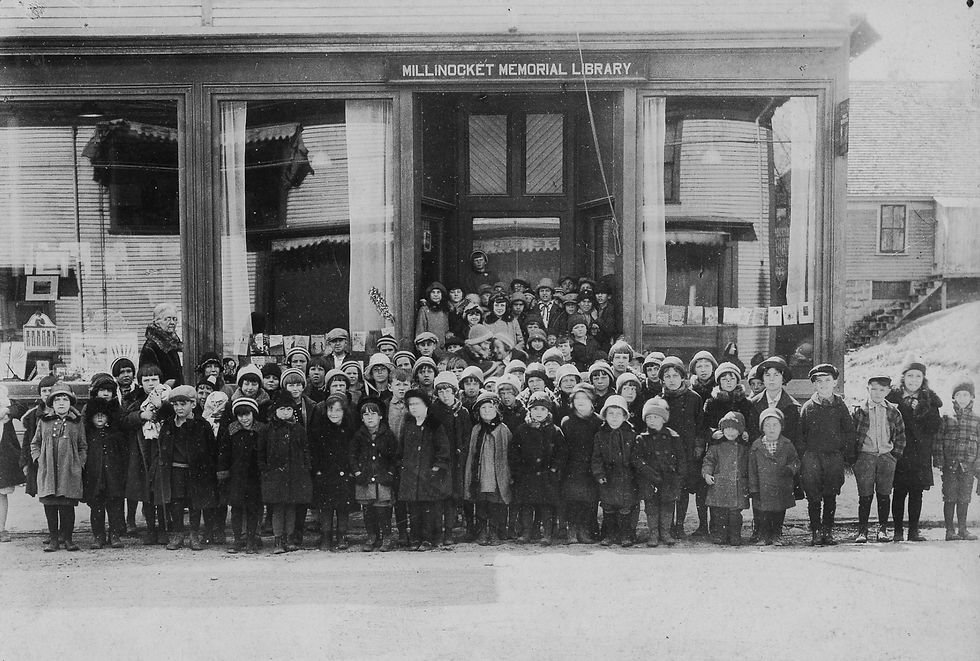
(A copy of Mcleod’s massive 5 volume work can be viewed at the Millinocket Memorial Library and at 4 other Maine libraries.)

Photo shows a notice posted in mill and dated 4/28/1942 lists instructions for workers if there was an air raid warning signal. The paper, as shown in a glass-front case, is located at the museum. The paper is faded and difficult to read.

Comments