
Early Little Italy
Odds and Ends From The MUSEUM!
By Trudy Wyman, Curator, Millinocket Society Museum
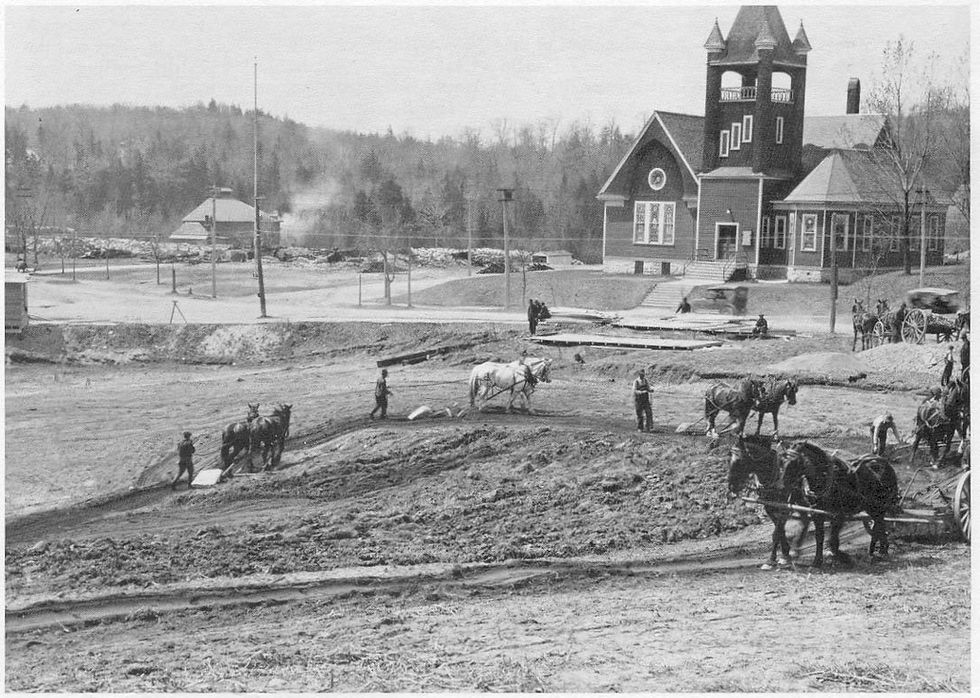
Shack Hill, Society Hill, Across the Tracks, New Development…words used to describe various sections of Millinocket through the years. And don’t forget Little Italy directly opposite the mill across Millinocket Stream. This neighborhood began when John Merrill, supervisor of GNP mill construction, went to Boston to secure Italian contract labor.
Through Marco (Lavogne) Lavonia, Merrill was able to secure Italians (1/3 of the GNP work crew) directly from Italy. Many were skilled at masonry (many buildings were brick), others laid track from the railroad to the mill site, installed sewer pipes and water and light systems for the town. However, the true head of the Italian community in Millinocket was Ferdinando “Fred” Peluso. McLeod’s history of GNP states Peluso “came as a clerk for the Italian crew on foundation work.”
This work crew did not speak English and did not understand American money so Peluso helped with that. At first the men lived in primitive huts and cooked meals over open fires. Peluso received two dollars for each laborer and $1.50 per day for room and board. Peluso became their administrator and advisor. He not only got them jobs, but provided food (from his store), wrote their letters and helped them start their homes. He became their Padrone – King of Little Italy.” (Laverty book)
Some news reports state over 3000 Italian laborers came to Millinocket. Many did their jobs and eventually returned to Italy or moved on to jobs elsewhere. But some stayed, paid their debts, built better housing and brought family members from Italy. New houses were built near Peluso Square. Families grew, they planted gardens and grew grapes in their backyards and played bocce ball in the streets. Descendants of a number of these construction workers still reside in Millinocket’s Little Italy and other areas of Millinocket.


Comments